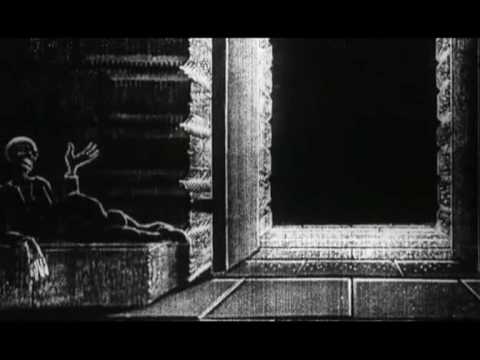
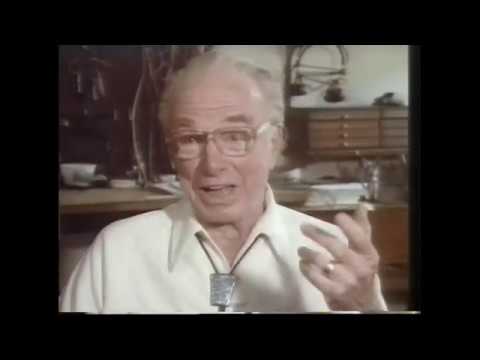
Last night I spun up IT’S ALL TRUE: BASED ON AN UNFINISHED FILM BY ORSON WELLES (1993). Though the DVD remains in-print, the documentary is not nearly as available as it ought to be; I don’t think you can find it streaming anywhere. It is not possible to contextualize this project swiftly, but hopefully I can at least do it accurately.
IT’S ALL TRUE was going to be an omnibus movie made up of segments that blurred the line between documentary and docudrama – think the work of Robert J. Flaherty (NANOOK OF THE NORTH), who in fact was engaged by Welles for the project and sold him some stories. This was going to be Welles’s third movie for RKO after THE MAGNIFICENT AMBERSONS, and in its initial concept would have consisted of four stories, most notably one about the history of jazz. Another segment, “My Friend Bonito,” dramatized the true story of a Mexican boy who befriended a bull, ending with the beast being spared from dying in the ring by the audience of the Plaza el Toreo. Welles actually dispatched director Norman Foster to commence shooting this segment in Mexico before AMBERSONS started filming, under his long-distance supervision.
Pearl Harbor was attacked in the middle of the AMBERSONS shoot, after which Welles was persuaded by the U.S. government to go down to South America and film a documentary about the Rio Carnival under the aegis of the Good Neighbor Policy, which was intended to promote “hemisphere solidarity.” A version of this policy predated FDR, but it was ratcheted up to another level during WWII, when the U.S. was trying to parry the fascist sympathies of the Brazilian government by promoting good relations via cultural exchange, celebrity visits, and various forms of propaganda. Walt Disney’s THE THREE CABALLEROS is one of the more famous examples of media produced along the desired themes. The idea was to try to sway Brazil into siding with the Allies or at least maintain neutrality and not going over to the Axis Powers.
Filming the carnival was basically put to the draft-age Welles as a patriotic duty by Nelson Rockefeller, who was at the time both Coordinator of Inter-American Affairs and a major stockholder in RKO. He had a month prior appointed Welles as a goodwill ambassador to Latin America, and meanwhile Hearst newspapers were running a smear campaign against Welles by loudly questioning his patriotism, calling him a communist, phoning up his draft board, etc. Welles reluctantly took the assignment, and without pay. RKO, similarly pressured, was expected to finance the production themselves, but under an arrangement where the government would reimburse the studio up to $300,000 for any losses.
The carnival was in February, so Welles had to spend the first several weeks of 1942 hurriedly wrapping AMBERSONS, finishing up his role in the chaotically-produced JOURNEY INTO FEAR (another Mercury production for RKO that Norman Foster came back to direct), and lash together a rough cut of AMBERSONS with his editor Robert Wise literally on the way to South America: After a briefing in D.C., Welles met Wise at Fleischer Studio in Miami where they did three days of round-the-clock editing before Welles took the flying boat south. This is also when Welles recorded his narration for the movie.
Once situated in Cinédia studio in Rio, Welles immersed himself in Brazilian culture, fell in love with it, and became far more enthusiastic about the project. It occurred to him that IT’S ALL TRUE could be re-imagined as an extension of the South America assignment. When he learned that the samba music heard at the carnival was essentially the Brazilian equivalent of jazz, the carnival documentary became a natural replacement for the jazz segment. “My Friend Bonito” was already a Latin American story. And a third, called “Jangadeiros” (also known as “Four Men on a Raft”) would rip from the headlines: Four impoverished fishermen had recently sailed a treacherous 1,650 miles on a dinky, six-log raft from their village to reach the capital and petition the Brazilian president about the exploitative business arrangement between the fishermen and the boat owners. The worker protections were won, and the men became national heroes.
In other words, Welles was developing a work a good deal more sophisticated and “off-agenda” than the simple travelogue both governments probably had in mind. Another basis of consternation was growing displeasure with Welles generally by the studio, which may explain the contradictory accounts of his conduct. Some in RKO seemed motivated to perpetuate rumors that he was spending his whole stay partying, drinking and fucking his way through the Brazilian nightclub dancers, while those more intimately involved with the project described him as a conscientious workaholic who virtually never slept. In addition, racist cables indicate that RKO wasn’t pleased by the interracial mingling that was seen in the footage that was coming back. The social themes Welles was tending toward were taking his cameras away from sanitized, touristic imagery to the literally more colorful marginalized communities, the hillside favelas, and the lives of commoners generally in a semi-feudal society. The production’s problems weren’t exclusively external. During the filming of “Four Men on a Raft,” the leader of the jangadeiros (the real fishermen were performing the re-enactment) tragically drowned.
The project was filmed in both black and white and Technicolor, with Washington keener than Welles on the latter. Most of the color shooting seems to have been done for the “Carnavale” segment, though a bit of “Four Men on a Raft” was shot in color as well. This is significant because THE IMMORTAL STORY (1968) is often talked about as Welles’s first color production, but it was really IT’S ALL TRUE.
It was while Welles was down in Rio that everything went wrong up in Hollywood with AMBERSONS. A condition for him agreeing to the Brazil trip was that a print of the movie, Robert Wise, and editing equipment would be sent to join him at Cinédia so they could finalize the editing of AMBERSONS from there. RKO did not live up to this promise, the given reason being that wartime restrictions on civilian flying had tightened and prevented Wise from making the trip. (Welles, functioning as a goodwill ambassador, had special permission.) Welles was shipped the print of the nearly finished movie as it existed at that time, plus various outtakes and other rolls for further editing work, but there wasn’t much he could do with the material in practical terms, and he remained focused on IT’S ALL TRUE. Meanwhile, a nervous RKO proceeded to preview AMBERSONS, an elegiac movie that had $1 million (a decent budget in those days) to recoup and seemed a particularly hard sell in wartime. The reaction was not to their liking, and so began the well-documented and truly extreme recutting and reshoots. All Welles could do was impotently exchange cables as he learned what was happening in the form of long-distance communication.
Concurrent with the hysteria around AMBERSONS and Welles being stranded in Brazil was a palace coup at RKO. George Schaefer, the president of the studio and Welles’s original champion, was forced to resign. His position had long been tenuous due to the studio’s financial issues, and his decision to hire Welles didn’t do anything to turn their fortunes around: CITIZEN KANE made no money due to its artificially limited release (threats from Hearst newspapers scared off the major chains from carrying it), AMBERSONS was now in trouble, and IT’S ALL TRUE was seen as a boondoggle presided over by a director who had gone native. (This, by the way, is loosely parodied at the beginning of Peter Jackson’s KING KONG, in the scene where the executives react to the dailies shot by Jack Black’s version of director Carl Denham, which is a caricature of Welles.)
The new regime was decidedly anti-Welles, and one of its first acts of business was to eject him and his Mercury players from the studio and pull the plug on IT’S ALL TRUE. The latter had been going on for six months and was seen as a nebulous money pit of a project. Records show that Welles had in fact spent only about half of the money budgeted for IT’S ALL TRUE by that point, but getting rid of Welles was a special priority, and the new broom swept clean. Welles did manage to convince the studio to let him finish shooting “Four Men and a Raft” on a shoestring basis, but when he touched back down in Hollywood the project and his contract were firmly over.
To justify their decision to fire Welles, RKO painted him in the press as irresponsible, erratic and profligate, and it’s a reputation that stuck to Welles for the rest of his life, severely damaging his ability to resume a Hollywood career. It was years before he could get a job directing again, and when he finally did with the THE STRANGER, it was a gig he took more or less to prove that he could make a program picture and follow orders. (The result: He could, and what’s more the result was financially successful, but this didn’t seem to be sufficient to counteract the legend.) He directed THE LADY FROM SHANGHAI without a salary, an arrangement he made so Columbia executive Harry Cohn would bail out his lavish stage musical AROUND THE WORLD (which ran out of money to pay for the $55,000 needed to release the costumes), followed by the low-budget MACBETH shot in 23 days for Republic Pictures, before he exiled himself to Europe for a decade. TOUCH OF EVIL (1958) for Universal should have been his big Hollywood comeback, but we know how that went. He continued scratching around to make movies internationally before returning to Hollywood to make THE OTHER SIDE OF THE WIND, another comeback-movie-that-wasn’t.
Welles didn’t entirely let go of IT’S ALL TRUE upon his return to the states in 1942, hoping he could interest another studio and make something out of the footage. At one point he even bought a bunch of it from RKO, but the cans wound up right back with them when he couldn’t keep up with the storage costs. Most of it seems to have quietly survived for decades, filed as stock footage. As part of RKO’s inventory, it changed hands a few times due to acquisitions – Desilu had it in the late 1950s, then eventually it became the property of Paramount. Sometime in the sixties or seventies, 200,000 feet of color footage, mostly from the “Carnaval” segment, was tossed into the ocean, presumably to free up some vault space. In interviews, Welles expressed his belief that this was the fate of all the footage, but in fact a significant amount – a little less than half – survived.
That remainder was discovered by a Paramount employee and Welles fan named Fred Chandler in the 1981. In 1984, the year before Welles died, the lab that Paramount used to develop film went out of business, which resulted in all the film cans the lab had in storage being returned to the studio. This precipitated a total inventory of the Paramount vaults, providing Chandler with the opportunity to fully catalog the IT’S ALL TRUE material and rule out once and for all if any of the original AMBERSONS survived. He was unfortunately able to confidently conclude that the negative for the deleted material from AMBERSONS had been incinerated in December 1942 – Hazel Marshall, a retired woman who was the head of the RKO stock film library in those days, confirmed that she carried out an order (standard, in those days) to do so.
(This, by the way, is why all hopes are pinned on finding that mythical lost in print in South America – even though it’s been said that Cinédia’s owner Adhemar Gonzaga cabled RKO that he complied with their eventual order to destroy it. Gonzaga was a film collector, so the wishful thinking is that he lied and that furthermore the nitrate print managed somehow to survive eighty plus years in stolen or misfiled silence.)
Fred Chandler reported the discovery of the IT’S ALL TRUE material to Welles, who was uninterested, declaring that the film was cursed. He only wanted to know about AMBERSONS, and Chandler remembered that “He broke down and cried in front of me” when he had to report that cause to be lost.
Chandler, Dick Wilson (Welles’s executive assistant during the production of IT’S ALL TRUE), film scholar Catherine L. Benamou, and other largely unsung heroes were instrumental in the creation of this documentary, which consists of a thirty-minute recap of the history of the project followed by an hour’s worth of silent rushes for “Four Men on a Raft” edited into unnarrated, speculative shape with equally speculative scoring and sound effects. Brief glimpses of the other two stories are also shown. The footage is pretty incredible, with the rare color footage of the carnival looking vibrant and not early as old as it is. Though still owned by Paramount, the total inventory IT’S ALL TRUE footage was given to the UCLA Film & Television Archive to be housed, and preservation of the footage – which is in the form of unstable nitrate film – is ongoing. Benamou wrote a book about THIS ALL TRUE that is to date probably the definitive account, but when/if the footage all gets scanned, it will hopefully be the basis of continued scholarship.
In addition to this documentary, the story was also covered in an episode of THE RKO STORY, a miniseries that ran in 1987: